
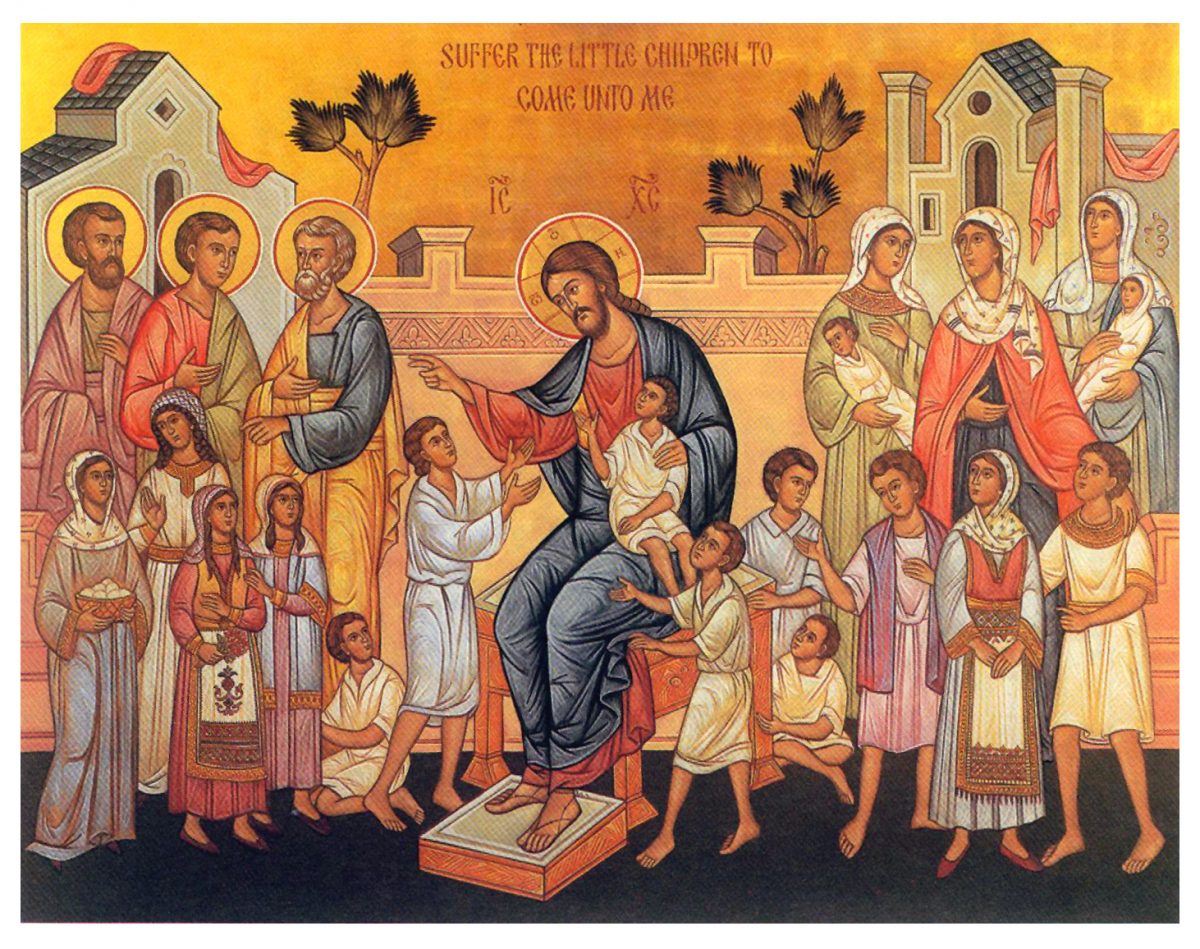
Can Children Meaningfully Participate in Discipleship Before They Profess Personal Faith.
Using a Disputation Proper Approach
By: Michelle Corless, DPT, MDiv

"Let the little children come to me and do not hinder them, for to such belongs the kingdom of heaven."
—Matthew 19:14
Question: Whether children can meaningfully participate in discipleship before they profess personal faith.
Arguments Against the Claim:
Objection 1: Children cannot meaningfully participate in discipleship because discipleship requires understanding and willful obedience, which children lack until the age of reason.
Objection 2: Jesus commands in Matthew 28:19: "Go therefore and make disciples.. teaching them to observe all that I have commanded you." Teaching presupposes the ability to comprehend. Children cannot yet comprehend doctrine, they cannot truly be disciples.
Objection 3: Discipleship involves denying oneself and taking up the cross (Luke 9:23). This requires maturity and voluntary sacrifice, qualities not yet developed in young children.
On the Contrary (Sed Contra)
Jesus says,
"Let the little children come to me and do not hinder them, for to such belongs the kingdom of heaven."
—Matthew 19:14
It appears that even young children may participate in the life of discipleship.
I Answer That (Respondeo)
Discipleship, in its essence, is not only a matter of intellectual comprehension but of relational participation in the life and teachings of Christ.
While mature discipleship does require conscious faith and obedience, the seeds of this life can be cultivated in children: 1) through formative spiritual practices 2) community belonging.
Children have covenantal inclusion (Deut 6:6-7, Acts 2:39) and can participate in discipleship relationally. Discipleship is formative, they are being shaped in faith rather than articulating it. Children are disciples in becoming, their hearts are being trained to respond to God's love and truth via the Church, parents, and the work of the Holy Spirit.
Responses to Objections
1: Children may not possess full understanding, but discipleship encompasses more than just intellect. It includes affections, imitation, and formation (Ephesians 6:4). Participation is developmental.
2: Teaching does presuppose comprehension, but the process of discipleship includes pre cognitive formation through story, ritual, and example (Deuteronomy 11:18-19). Children can learn through lived experience before they have the ability to abstract reason.
3: The command to take up the cross grows with spiritual maturity. Yet even young children can learn sacrificial love through obedience and empathy (1 John 4:19). They mirror the pattern of the cross before they can fully articulate it.
Children can meaningfully participate in Discipleship.
Share:
Raising Kids Who Love to Learn: Cultivating a Teachable Spirit at Home